
How to Find the Best Gym Space for Rent in Las Vegas
Finding the best gym space for rent in Las Vegas comes down to matching a building’s bones, its floor load, plumbing, power, and parking, to what your fitness concept actually demands, then negotiating a lease that pays back your build-out. That’s a taller order for a gym than for almost any other retail tenant. A nail salon or a clothing boutique can move into a standard shell and open within weeks. A gym often needs reinforced floors, added plumbing for showers, heavier electrical service, and a formal change in how the city classifies the building’s use.
The demand side is working in your favor. The Las Vegas metro area passed roughly 2.4 million residents in 2024, according to U.S. Census Bureau data, and Henderson ranked as the third fastest growing city in the country per capita over the past decade, per a StorageCafe study. More rooftops mean more members within a short drive of the right storefront. The real work is picking a space that fits your format without draining your budget before you ever open the doors.
This guide walks through what actually matters when you tour space here: the physical requirements a fitness use imposes, the submarkets that reward the right concept, the zoning and permitting that can add months, and the lease clauses worth fighting for. If you’re a studio owner, an investor, or a first-time gym operator sizing up a location, the goal is to help you separate a space that looks good on a listing from one that can carry your business.
What to Look for in a Gym or Fitness Studio Space
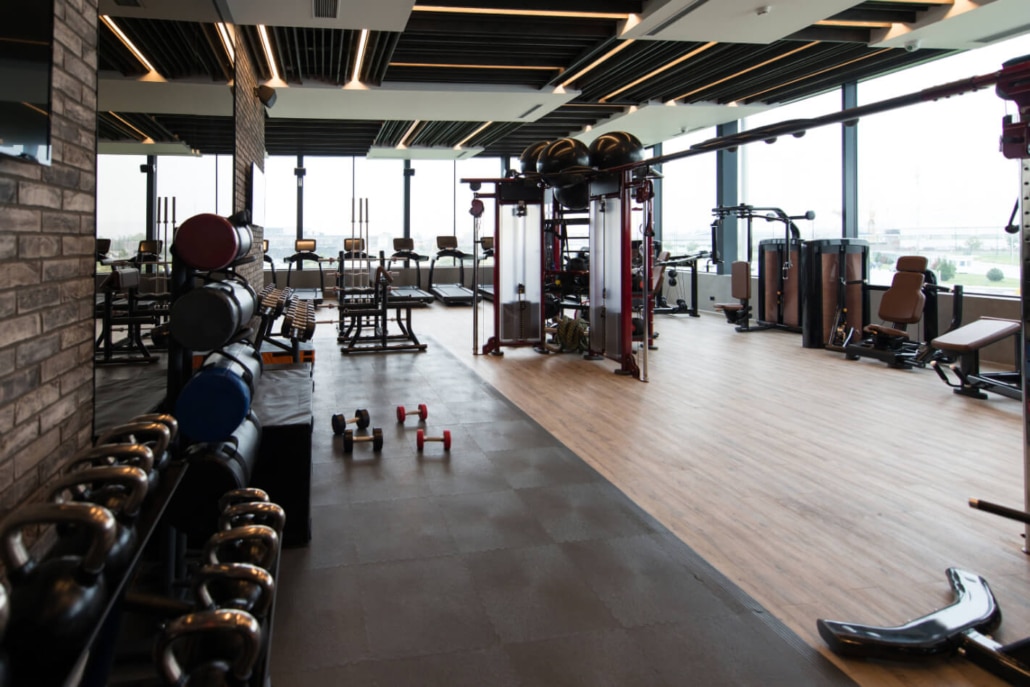
The five things that make or break a fitness space are structural and mechanical, not cosmetic. You can repaint a wall in a weekend. You can’t easily add three feet of ceiling height or double the electrical service after you’ve signed the lease. Walk every prospective space with this short list in hand:
- Square footage and ceiling height. Boutique studios run comfortably in 1,500–3,000 sq ft. Functional-fitness gyms with rigs and rope climbs want 12 to 14 feet of clear height, which quietly rules out a lot of older strip-center bays.
- Floor load-bearing capacity. Racks of plates, a loaded sled, and rows of machines concentrate weight in ways a standard slab may not be rated for. Upper-floor spaces are the usual trap here, and it’s the first thing worth confirming.
- Plumbing for locker rooms and showers. Adding wet walls to a dry shell is one of the costliest build-out items there is, so a space with existing restroom and plumbing infrastructure saves serious money.
- Electrical capacity. Treadmills, a heavy HVAC load for a room full of exerting bodies, and sometimes a sauna or laundry all pull power. Confirm the panel’s amperage before you fall for the layout.
- Parking and signage. Members quit over a bad parking lot. Look for a healthy parking ratio and clean frontage where your sign reads from the road at speed.

Best Types of Locations for Gyms in Las Vegas
The best gym locations in Las Vegas sit inside daily-errand traffic, close to where members already live and drive. A destination gym can pull from farther out, but most studios and neighborhood gyms live or die on convenience. A few location types consistently outperform here.
Neighborhood strip and grocery-anchored centers near dense housing are the workhorses. Summerlin, the Southwest, and the fast-growing Henderson submarkets around Green Valley and Inspirada all pair rooftop density with the kind of centers members already pass on the way home from work.
Co-tenancy matters more for fitness than most owners expect. A space beside a juice bar, a physical-therapy or medical office, or a wellness clinic borrows foot traffic and signals the right lifestyle to passersby. That adjacency does quiet marketing you never pay for.
Larger-format gyms have a different playbook. Big-box fitness and functional-training warehouses often find their best fit in flex or light-industrial space near the Airport and Southeast submarkets, where clear heights and slab ratings suit heavy equipment and rent per square foot runs lower than prime retail. Downtown works for a boutique concept chasing a specific membership, though parking demands a closer look there.
Road visibility closes the loop. Frontage on a high-traffic corridor such as Rainbow, Eastern, or St. Rose Parkway turns your sign into a billboard. If you’re weighing a fitness lease against the broader market, our ultimate guide to leasing commercial space in Las Vegas breaks down how visibility and co-tenancy move rent across property types.
Zoning & Permitting Considerations for Fitness Businesses
Zoning and permitting are where fitness build-outs quietly gain months, so sort them before you sign rather than after. A gym usually triggers an assembly occupancy classification, often Group A-3 under the building code, because you’re gathering people together in one room. If the previous tenant was retail or office, that change of use pulls in stricter requirements for exits, restrooms, and fire protection.
Reclassifying to assembly use can also change your required parking count, since municipalities often set higher ratios for gathering spaces than for the retail or office use that came before. A center that looked fine on paper can fall short once the occupancy load is recalculated, so it’s worth checking early with the leasing team.
ADA compliance is not optional, and it’s easy to underestimate. Accessible routes, restrooms, and any locker or shower facilities all have to meet the ADA Standards for Accessible Design. Retrofitting an older space to hit those marks can eat into a build-out budget quickly, especially in bathrooms.
Timeline is the piece owners forget. A change-of-use permit paired with a full build-out in the City of Las Vegas or Clark County jurisdictions commonly runs several months from plan submittal through final inspection, and that clock usually ticks while you’re already paying rent. Confirm which parts of a space already comply before you commit. It helps to filter for units that already suit assembly or fitness use when you browse available commercial spaces instead of starting from a raw shell.
Lease Terms to Negotiate for a Fitness Space
The lease terms that matter most for a gym all circle one thing, and it’s who pays for the expensive build-out and how long you have to earn it back. Fitness tenants sink far more into a space than a typical retailer does, so these clauses carry real dollars.
Tenant improvement allowance is your first negotiation. A TI allowance is landlord money put toward your build-out, and for a plumbing-and-power-heavy use like a gym, a strong allowance can be the difference between a workable deal and a hard no. Push for it, and get the scope in writing.
Match your lease term to your payback. If you’re investing heavily in reinforced floors, showers, and equipment, a longer initial term spreads that cost and protects your location, though it also locks you in. Shorter terms hand you flexibility at the price of renewal uncertainty. There’s no universally right answer, only the one that fits your capital.
Read the personal guarantee and exit clauses closely. Most landlords will ask for a personal guarantee, and the smart play is to cap it or burn it down over time rather than sign an open-ended one. Early termination and co-tenancy protections are worth negotiating too, so a failing anchor or half-empty center doesn’t trap you in a lease you can’t use.
How RAM Group Can Help
RAM Group’s advantage is straightforward. We know which Las Vegas spaces can actually carry a gym before you spend a dollar chasing a listing. Public listing sites show you square footage and asking rent. They won’t tell you whether the slab is rated for a rack room, whether the panel has the amperage for your equipment, or whether the center’s zoning welcomes assembly use.
That local read is what saves fitness tenants months of wasted effort. With deep experience across office, retail, medical, and industrial property in Southern Nevada, we match your format to the submarkets and buildings where it has room to work, from Summerlin studios to Southwest and Henderson neighborhood centers. We also flag the deal-killers early, whether that’s an upper-floor bay that can’t take the load or a shell that would need a small fortune in new plumbing.
Working with a broker who manages local property directly beats scrolling listings on your own, because we see what’s coming available and know what each space really costs to open. When you’re ready, contact RAM Group about current availability suited to fitness and gym use, and we’ll point you toward the spaces actually worth touring.
Frequently Asked Questions
A couple of questions come up on nearly every fitness-space search in the valley.
How much space do I need for a gym or fitness studio?
It depends on your class format, equipment density, and locker room needs. Small boutique studios can work well in 1,500–3,000 sq ft, while larger full-service gyms with a wide equipment floor, showers, and group rooms need significantly more. Map your equipment layout and your peak class size first, then shop for square footage that fits with a little room to grow.
What should I look for in a gym lease?
Focus on the four factors fitness tenants feel most: the tenant improvement allowance, the lease term length, the permitted-use language, and the parking ratio. The TI allowance offsets your build-out, the term should match your payback horizon, the permitted use has to clearly allow assembly or fitness activity, and the parking ratio must support classes emptying and filling at the same time.


